Idea Magazine #340
April 14, 2010
New feature for Idea Magazine issue #340 called Forms of Practice, interviewing young designers.
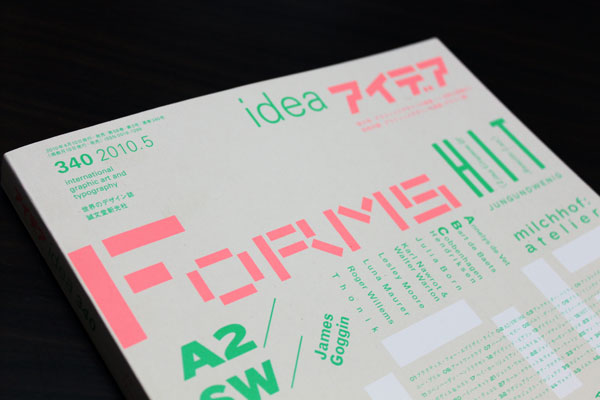
An excerpt:
Toward a new form of practice
A number of young designers in Europe and America are attempting to develop their own paths in exploring graphic design through innovative small-scale practices. Many of the designers featured here were born in the 1970s and 1980s, coming of age in commercial practice in the digital environment. The majority of those featured operate within the sphere of graphic design production from the approach of a more personal practice, inflecting their work with nuanced, idiosyncratic conceptual and formal approaches.

While widely varied due to cultural context and social/environmental differences, all have a kinship in unique approaches to developing formal options for clients. The use of the word “option” as applied here is perhaps the most relevant key point for the latest wave of graphic design from abroad- perhaps the “solution” as an end result of graphic design as a process is a dead methodology. What are instead offered are graphic “options” in lieu of “solutions”- inquiries answered with inquiries, questions answered with questions. The work featured offers playful, tentative answers instead of cold, hard end results.

This issue of Idea comes with a bonus satellite publication containing interviews with all of the designers and design studios featured in English and Japanese.


Mini Graphics
April 14, 2010

Foreword for a new book from Sandu Media called Mini Graphics, an exploration of small-scale graphic design projects.

An excerpt:
Go small.
Scale is a funny thing. Graphic design practitioners consider it daily on a relative scale- the size of a logo in relation to a business card, book title in relation to the size of a title page, or glossy button in relation to the size of the desired user’s browser. Beyond the design project itself, scale in terms of critically assessing professional practice is also valuable, especially in contemporary times- a juncture where there is such a variety of models as to what professional practice can be.

More and more, the boundaries of graphic design as a profession are widening. The potential of design as a small-scale, craft-centric practice that exploits the potential of on-demand production both in production and deployment has been more fully realized in the contemporary context. The main tool of contemporary graphic design- the personal computer- has become an increasingly affordable object to attain as of late and ease-of-use of this tool has developed more fully as computers themselves have become more sophisticated and powerful.

This tide shift in the technology and tools of graphic design and reprographics over the past decade is hugely important. Graphic design is an evolutionary process, and while it seems to move slowly to practitioners, it moves infinitely faster than other communication practices. These changes are both immediate and gradual, and they affect many aspects of graphic design- from process to product. Most immediately noticeable is how technology affects the final product. As evinced by the work in this book, graphics are no longer simplistic, unified brand signifiers rendered by previous generations. Designers today use broader palettes of color, form, space, and sheer methodology to achieve their results.

I have a number of projects featured in the book, including the identity design for my own design studio and identity projects for a handful of clients and collaborators.


04.13.2010
April 13, 2010

A number of pieces of my writing and design are now available in Harajuku at the Zine’s Mate shop within Vacant Gallery. Info here.
BCCJ Acumen
April 11, 2010
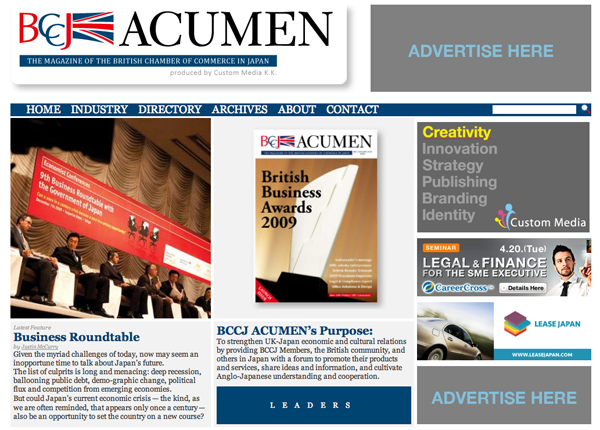
New website for the British Chamber of Commerce in Japan’s magazine, Acumen.
04.11.2010
April 11, 2010
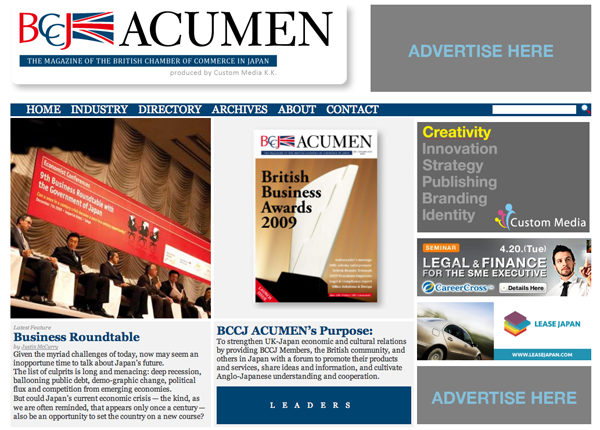
Just launched: a new website for the British Chamber of Commerce in Japan’s magazine, Acumen.

04.07.2010
April 7, 2010

Website refresh for Immigrant Film, LLC.

My typeface Rubber Vloeren as used by Michael Worthington in his poster for the exhibition Forms of Inquiry at the Architectural Association in the U.K.
04.06.2010
April 6, 2010
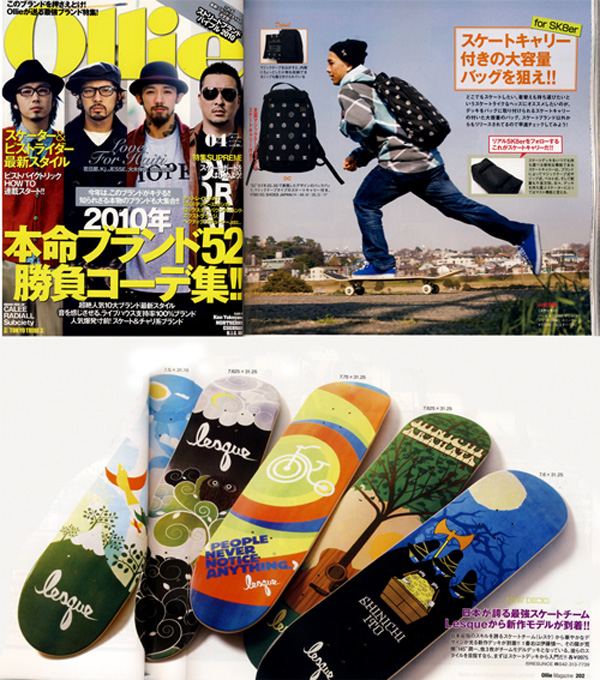
New Lesque decks in the latest issue of Ollie Magazine.
04.05.2010
April 5, 2010

New little series of graphics for Néojaponisme as of last week called “Do You Remember?“. A revisit of an older project.
Also, my students are exhibiting motion graphics and print work at Temple University Japan’s end of the semester exhibition. Included are a passel of type history zines and a montage of assorted projects. Photos to come…
Also, Stacker in use for the new Brian Roettinger/No Age split 7″.